
Women’s health needs can change at different stages of life, from menstrual and pelvic pain concerns to fibroids, endometriosis, ovarian cysts and fertility-related conditions. Finding an experienced gynaecologist can help women understand their symptoms, receive an accurate diagnosis and choose a suitable treatment plan.
If you are looking for the Best Laparoscopic Gynecologist in INDIRA NAGAR, it is important to consider the doctor’s qualifications, surgical experience, approach to minimally invasive procedures and ability to explain both surgical and nonsurgical treatment options.
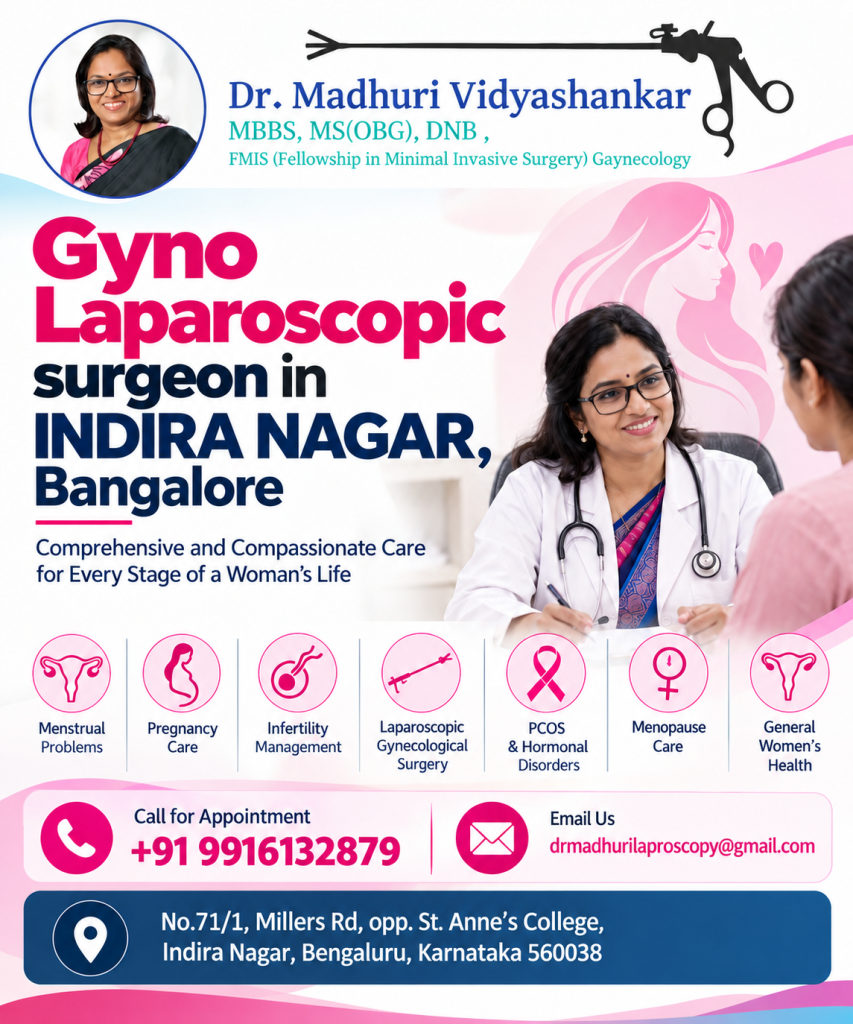
Dr. Madhuri Vidyashankar P is a senior consultant in advanced laparoscopic and hysteroscopic surgery and gynaecology. Her clinical focus includes conditions such as uterine fibroids, endometriosis, ovarian cysts and selected fertility-related concerns. Treatment recommendations depend on each patient’s diagnosis, medical history and reproductive goals.
Laparoscopic Gynecologist in INDIRA NAGAR
A laparoscopic gynaecologist specialises in minimally invasive procedures used to diagnose or treat certain conditions affecting the uterus, ovaries, fallopian tubes and other pelvic structures.
Laparoscopic surgery uses a small camera and specialised instruments inserted through small abdominal incisions. Compared with open surgery, it may offer smaller scars, less postoperative discomfort and a shorter hospital stay for suitable patients.
Laparoscopic Surgery for Women in INDIRA NAGAR
Laparoscopic surgery may be considered for a range of gynaecological conditions. The right procedure depends on the underlying problem, symptom severity, previous treatments and whether the patient wishes to preserve fertility.
Common procedures and conditions include:
- Uterine fibroids: Surgery may remove fibroids while preserving the uterus (myomectomy) or, when appropriate, remove the uterus (hysterectomy).
- Endometriosis: Laparoscopy may help identify and treat endometriosis lesions or pelvic adhesions in selected patients.
- Ovarian cysts: Certain cysts may be removed laparoscopically after assessment of their size, appearance and clinical significance.
- Ectopic pregnancy: Surgery may be necessary in selected cases, depending on the patient’s condition and treatment options.
- Pelvic adhesions: Selected adhesions may be treated when they cause symptoms or affect pelvic organ function.
- Fertility-related conditions: Some procedures may help address specific anatomical problems, but surgery is not suitable for every infertility concern.
Potential advantages of laparoscopic surgery
- Small incisions compared with conventional open surgery.
- Less postoperative pain for many patients.
- Reduced blood loss in some procedures.
- Potentially shorter hospital stays.
- Earlier return to normal activities in suitable cases.
Laparoscopic surgery is still surgery and carries risks, including bleeding, infection, injury to nearby organs, blood clots and anaesthesia-related complications. A specialist should explain the expected benefits, alternatives and risks before treatment.
Best Gynecologist in INDIRA NAGAR
Choosing a gynaecologist involves more than searching for a nearby clinic. Women should look for appropriate qualifications, relevant experience, clear communication and a treatment approach tailored to their health needs.
A gynaecological consultation may help assess symptoms such as heavy menstrual bleeding, irregular periods, persistent pelvic pain, painful intercourse, suspected fibroids, ovarian cysts or difficulties conceiving.
Depending on the symptoms, assessment may include a medical history, physical examination, ultrasound imaging, blood tests or other investigations. Not every condition requires surgery; medication, monitoring or other treatments may be appropriate.
Laparoscopic Hysterectomy in INDIRA NAGAR
A laparoscopic hysterectomy is a minimally invasive operation to remove the uterus. It may be recommended for selected patients with symptomatic fibroids, adenomyosis, severe endometriosis in certain circumstances, uterine prolapse or other conditions when appropriate alternatives have not provided sufficient relief.
What happens during the procedure?
- Preoperative assessment: The surgeon reviews symptoms, medical history, scans and other relevant test results.
- Anaesthesia: The operation is generally performed under general anaesthesia.
- Small incisions: The surgeon inserts a camera and specialised instruments through small abdominal incisions.
- Removal of the uterus: The uterus is separated carefully from surrounding tissues and removed using the planned surgical technique.
- Recovery and follow-up: The patient is monitored after surgery and receives instructions about wound care, activity and follow-up appointments.
Whether the cervix, fallopian tubes or ovaries are also removed depends on the diagnosis and individual surgical plan. Removal of the ovaries can cause immediate menopause in a patient who has not already reached menopause, so this decision requires careful discussion.
Recovery after laparoscopic hysterectomy
Recovery varies with the complexity of surgery and the patient’s overall health. Many patients gradually resume light activities during the early recovery period, while full recovery often takes several weeks.
Patients should follow the surgeon’s instructions about lifting, exercise, driving, returning to work and resuming sexual activity. Seek medical advice promptly for fever, worsening pain, heavy bleeding or signs of wound infection. Chest pain, breathing difficulty or sudden leg swelling requires urgent medical attention.
It is important to understand that hysterectomy permanently removes the ability to carry a pregnancy. Women who wish to become pregnant should discuss fertility-preserving options before making a decision.
Why Consult Dr. Madhuri Vidyashankar P?
Dr. Madhuri Vidyashankar P is a senior consultant in advanced laparoscopic and hysteroscopic surgery and gynaecology. Her published qualifications include MBBS, MD (Obstetrics and Gynaecology), DNB, a Fellowship in Minimal Invasive Surgery (Gynaecology) and a Fellowship in Reproductive Medicine.
Her official website reports over 23 years of experience in women’s health and more than 15 years of exclusive practice in gynaecological laparoscopy. Her areas of practice include fibroid surgery, endometriosis, ovarian cysts, hysteroscopy and selected fertility-preserving procedures.
A consultation can help patients understand their diagnosis, compare treatment options and decide whether minimally invasive surgery is appropriate for their individual needs.
Clinic Address and Contact Details
Doctor: Dr. Madhuri Vidyashankar P
Speciality: Advanced Laparoscopic and Hysteroscopic Surgery, Gynaecology
Consultation location: No. 71/1, Millers Road, opposite St. Anne’s College, INDIRA NAGAR, Bengaluru, Karnataka 560001
Phone: +91 99161 32879
Email: [email protected]
Website: https://drmadhurigynaeclaparoscopy.com/
Please confirm the consultation location, appointment availability and current timings with the clinic before visiting.
Frequently Asked Questions
1. What does a laparoscopic gynaecologist treat?
A laparoscopic gynaecologist may diagnose or treat selected conditions involving uterine fibroids, endometriosis, ovarian cysts, ectopic pregnancy and pelvic adhesions. The appropriate treatment depends on the patient’s diagnosis and health goals.
2. What are the benefits of laparoscopic surgery for women?
Potential benefits include smaller incisions, less postoperative discomfort and a shorter hospital stay compared with open surgery in suitable cases. Results and recovery vary according to the procedure and individual circumstances.
3. When is laparoscopic hysterectomy recommended?
It may be considered for symptomatic fibroids, adenomyosis, selected cases of severe endometriosis, uterine prolapse or other uterine conditions when other appropriate treatments have not worked or are unsuitable.
4. How long does recovery take after laparoscopic gynaecological surgery?
Recovery depends on the type of surgery and the patient’s health. Some patients resume light activities within days, while recovery after more extensive procedures can take several weeks. Follow your surgeon’s advice.
5. Can laparoscopic surgery help with infertility?
In selected cases, surgery may treat endometriosis, adhesions or other anatomical problems that affect fertility. However, surgery is not necessary for every infertility concern, and the potential benefits should be weighed against the risks and other available treatments.
6. Is laparoscopic hysterectomy suitable for every woman with fibroids?
No. Treatment depends on the size and location of fibroids, symptoms, age, overall health and fertility goals. Options may include monitoring, medication, uterus-preserving surgery or hysterectomy.
7. How do I prepare for a gynaecology consultation?
Bring previous medical reports, ultrasound scans, test results and a list of medicines. Be prepared to discuss your symptoms, menstrual history, previous procedures and future pregnancy plans.
8. Where can I consult a laparoscopic gynaecologist in INDIRA NAGAR, Bangalore?
You can contact Dr. Madhuri Vidyashankar P through the official website, https://drmadhurigynaeclaparoscopy.com/, or call +91 99161 32879 to confirm appointment details.
Conclusion
Minimally invasive gynaecological surgery can be a useful treatment option for selected women’s health conditions. The best treatment depends on an accurate diagnosis, the severity of symptoms, overall health and future fertility plans.
If you are looking for a laparoscopic gynaecologist in INDIRA NAGAR, Bangalore, schedule a consultation to discuss your concerns, understand the available options and make an informed decision about your care.
