

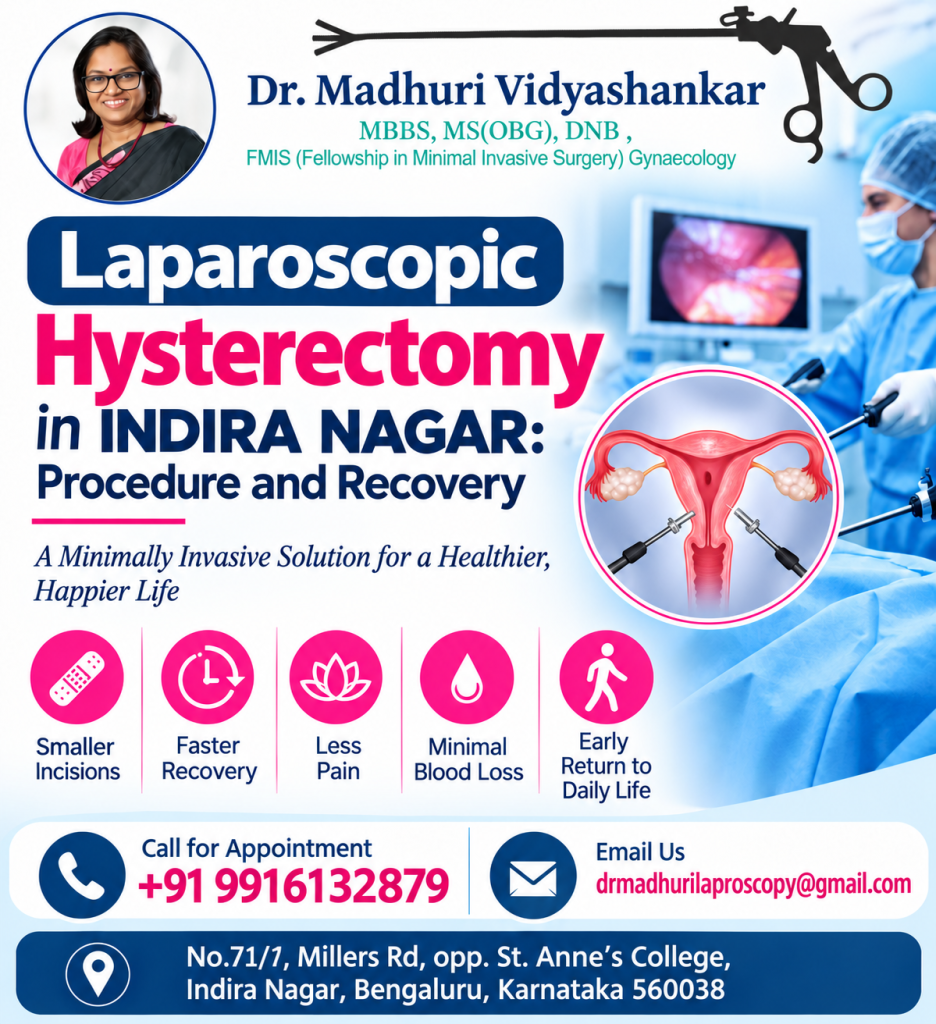
A hysterectomy is a surgical procedure to remove the uterus. It may be recommended for women experiencing persistent heavy menstrual bleeding, uterine fibroids, adenomyosis, severe endometriosis, uterine prolapse, or other gynaecological conditions when appropriate alternatives have not provided sufficient relief.
Laparoscopic hysterectomy in INDIRA NAGAR is a minimally invasive surgical option that uses a small camera and specialised instruments inserted through small abdominal incisions. Compared with open surgery, laparoscopic surgery may offer smaller scars, less postoperative pain, reduced blood loss, and a shorter hospital stay in suitable patients.
Dr. Madhuri Vidyashankar P provides advanced laparoscopic and hysteroscopic gynaecological care in Bengaluru. A consultation helps determine whether hysterectomy is appropriate based on the diagnosis, symptoms, medical history, and future reproductive goals.
Endometriosis Specialist in INDIRA NAGAR, Bangalore
Endometriosis is a condition in which tissue similar to the lining of the uterus grows outside the uterus. It can cause painful periods, chronic pelvic pain, pain during intercourse, and sometimes fertility difficulties.
A gynaecologist may recommend medication, hormonal treatment, laparoscopic surgery, or a combination of approaches, depending on the severity of symptoms and the patient’s goals.
Laparoscopic surgery can help identify and treat endometriosis lesions and adhesions. In selected cases involving severe symptoms or other uterine conditions, hysterectomy may be discussed. However, hysterectomy is not automatically required for endometriosis, and it does not guarantee that all pelvic pain will disappear.
Women experiencing persistent pelvic pain or severe menstrual cramps should seek a detailed gynaecological assessment to understand their treatment options.
Laparoscopic Hysterectomy in INDIRA NAGAR
Laparoscopic hysterectomy may be recommended when uterine conditions cause significant symptoms and other suitable treatments have not worked or are not appropriate.
Conditions that may lead to a hysterectomy discussion include:
- Uterine fibroids causing heavy bleeding, pressure, or pain.
- Adenomyosis associated with persistent pain or heavy periods.
- Severe endometriosis in selected cases.
- Uterine prolapse.
- Abnormal uterine bleeding after appropriate investigation.
- Certain precancerous conditions or gynaecological cancers, depending on specialist assessment.
How is laparoscopic hysterectomy performed?
- Preoperative assessment: The doctor reviews symptoms, medical history, scans, blood tests, and other investigations as needed.
- Anaesthesia: The operation is usually performed under general anaesthesia.
- Small incisions: Small openings are made in the abdomen to introduce a camera and surgical instruments.
- Removal of the uterus: The surgeon carefully separates the uterus from surrounding tissues and blood vessels. The method of removal depends on the individual case.
- Completion and monitoring: The incisions are closed, and the patient is monitored during recovery.
The cervix, fallopian tubes, and ovaries may or may not be removed depending on the diagnosis and the surgical plan. Removing the ovaries can cause immediate menopause in women who have not already reached menopause, so this decision requires careful discussion.
Potential benefits
- Smaller abdominal incisions and scars.
- Less postoperative pain for many patients compared with open surgery.
- Reduced blood loss in many cases.
- A shorter hospital stay in suitable patients.
- Earlier return to everyday activities.
Every operation has risks, including bleeding, infection, blood clots, injury to nearby organs, and complications related to anaesthesia. The most appropriate surgical approach depends on the patient’s condition and the surgeon’s assessment.
Hysteroscopy Treatment in INDIRA NAGAR, Bangalore
Hysteroscopy is different from hysterectomy. It involves passing a thin camera through the vagina and cervix to examine the inside of the uterus. No abdominal incision is usually needed.
Hysteroscopy may be used to investigate abnormal uterine bleeding and certain fertility concerns. It can also help diagnose or treat specific conditions inside the uterine cavity.
Hysteroscopy may be recommended for:
- Detecting or removing endometrial polyps.
- Evaluating certain uterine fibroids that project into the uterine cavity.
- Investigating unexplained abnormal uterine bleeding.
- Identifying and treating intrauterine adhesions.
- Assessing selected uterine abnormalities during fertility investigations.
The procedure may be diagnostic or operative. Recovery varies according to the treatment performed, but mild cramping or light spotting can occur for a short period.
Hysteroscopy does not remove the uterus and may be an alternative to more extensive surgery for some conditions. The appropriate option depends on the location and nature of the problem.
Female Infertility Treatment in INDIRA NAGAR
Female infertility can have several causes, including ovulation disorders, endometriosis, blocked fallopian tubes, uterine abnormalities, and age-related changes in fertility. Assessment generally considers both partners where appropriate and may include a menstrual and medical history, ultrasound, hormone testing, and evaluation of the uterus and fallopian tubes.
Treatment depends on the underlying cause and may include ovulation-related treatment, selected hysteroscopic procedures, fertility-enhancing laparoscopic surgery, intrauterine insemination (IUI), or in vitro fertilisation (IVF).
Laparoscopy may help diagnose or treat certain pelvic conditions, including endometriosis and adhesions, in selected patients. However, surgery is not necessary for every person experiencing infertility, and the benefits must be weighed against potential risks and the effect on future fertility.
Important: Hysterectomy permanently removes the ability to carry a pregnancy. It is not a treatment for infertility. Anyone who hopes to become pregnant in the future should clearly discuss fertility goals with the gynaecologist before considering surgery.
Recovery After Laparoscopic Hysterectomy
Recovery differs depending on the complexity of surgery, overall health, and whether additional procedures were performed.
- First few days: Rest, take prescribed medication, walk gently as advised, and follow discharge instructions.
- First few weeks: Gradually increase light activities. Avoid heavy lifting, strenuous exercise, and driving until the treating team confirms it is safe.
- Follow-up: Attend scheduled reviews and follow the surgeon’s guidance on wound care, bathing, work, sexual activity, and return to exercise.
- Emotional and physical adjustment: Allow time for recovery and discuss concerns about menopause, intimacy, mood, or changes in daily life with the healthcare team.
Contact your healthcare provider promptly if you develop fever, worsening abdominal pain, heavy vaginal bleeding, foul-smelling discharge, or redness or discharge from an incision. Seek urgent medical attention for chest pain, difficulty breathing, or sudden swelling or pain in one leg.
Why Consult Dr. Madhuri Vidyashankar P?
Dr. Madhuri Vidyashankar P is listed on her official website as a senior consultant in advanced laparoscopic and hysteroscopic surgery and gynaecology. Her qualifications include MBBS, MD (OBG), DNB, a Fellowship in Minimal Invasive Surgery (Gynaecology), and a Fellowship in Reproductive Medicine. The website reports over 23 years of experience in women’s health.
Consultation can help patients understand their diagnosis, available nonsurgical and surgical treatments, expected recovery, and implications for future fertility. The recommended treatment should be individualised rather than based on symptoms or location alone.
Doctor and clinic contact details
- Doctor: Dr. Madhuri Vidyashankar P
- Clinic/consultation location: No. 71/1, Millers Road, opposite St. Anne’s College, INDIRA NAGAR, Bengaluru, Karnataka 560001
- Phone: +91 99161 32879
- Email: [email protected]
- Website: https://drmadhurigynaeclaparoscopy.com/
Please confirm the current consultation schedule and location when booking.
Frequently Asked Questions
1. What is laparoscopic hysterectomy?
It is a minimally invasive operation to remove the uterus using a camera and specialised instruments inserted through small abdominal incisions.
2. Why might a doctor recommend laparoscopic hysterectomy?
It may be considered for conditions such as symptomatic fibroids, adenomyosis, severe endometriosis in selected cases, uterine prolapse, or persistent abnormal bleeding when other suitable treatments are ineffective or inappropriate.
3. How long does recovery take after laparoscopic hysterectomy?
Recovery varies by patient and procedure. Many patients resume light activities relatively early, but full recovery commonly takes several weeks. Follow your surgeon’s instructions before returning to strenuous activity.
4. Is hysteroscopy the same as hysterectomy?
No. Hysteroscopy uses a thin camera to examine or treat the inside of the uterus. Hysterectomy is an operation to remove the uterus.
5. Can endometriosis be treated without hysterectomy?
Yes. Depending on symptoms and reproductive goals, treatment may include pain relief, hormonal medication, or laparoscopic surgery to treat endometriosis. Hysterectomy is considered only in selected circumstances and does not guarantee complete pain relief.
6. Can I become pregnant after a hysterectomy?
No. After the uterus is removed, it is no longer possible to carry a pregnancy. Discuss fertility-preserving alternatives before surgery if you wish to have children.
7. Does hysteroscopy help with infertility?
It can identify and treat certain uterine cavity problems, such as polyps or adhesions, that may affect reproductive health. Whether it is beneficial depends on the cause of infertility.
8. Where can I consult for laparoscopic hysterectomy in INDIRA NAGAR?
You can contact Dr. Madhuri Vidyashankar P through the official website or phone number listed above to confirm consultation availability and discuss your condition.
Conclusion
Laparoscopic hysterectomy can be an effective treatment for selected uterine conditions, but it is a major and irreversible decision. Understanding the diagnosis, alternatives, risks, recovery expectations, and reproductive implications is essential. A consultation with an experienced gynaecologist can help you choose a treatment plan suited to your health and personal goals.
The doctor’s qualifications, reported experience, contact number, email, and Millers Road consultation address are based on information published on the official website.
