When 20-year-old Priya (name changed), a Bangalore resident who got married at a young age, did not get her periods for over three consecutive months, little did she know that the next few weeks would be so traumatic for her. It took almost two to three months for the doctors to diagnose the exact medical condition that she was going through.
The doctors first performed surgery to examine her fallopian tubes and diagnose her secondary amenorrhea. They detected abdominal tuberculosis and treated for the same, but the actual health issue was still not identified. Following a period of regular menstrual cycles for more than 7 years, Priya again presented with secondary amenorrhea (absence of menstruation for 3+ months), with on-and-off pain in the abdomen.
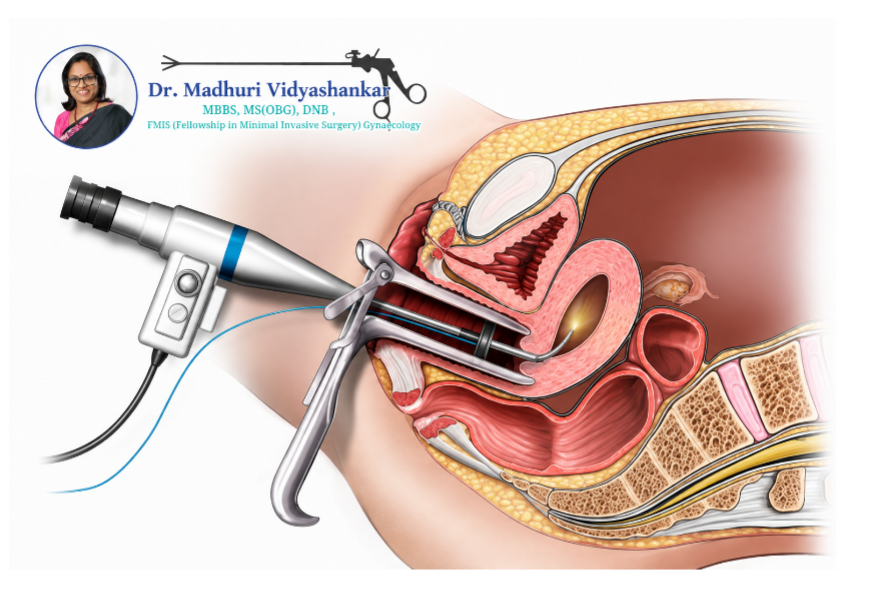
After multiple routine tests, her doctor, Dr Madhuri Vidyashankar P, a consultant hysteroscopic and laparoscopic surgeon and gynecologist, HRBR Layout and Indiranagar, Motherhood Hospitals, Bangalore, conducted a diagnostic laparoscopy. It showed a frozen pelvis with adhesions between the omentum (a large apron-like structure in the abdomen that protects the visceral organs) and the anterior abdominal wall. The team, led by Dr Madhuri, conducted a complete assessment, which showed that the patient had persistent pelvic adhesions, malformed fallopian tubesand a rudimentary uterine horn, which led to the diagnosis of genital tuberculosis (GTB).
Genital tuberculosis, which doctors also call Pelvic Koch’s disease, exists as a hidden infection that affects the abdominal and pelvic regions. It presents itself in the form of various gynecological disorders, thus causing severe reproductive health problems.
The patient was prescribed a 12-month treatment with an anti-TB drug. The treatment successfully brought back her menstrual cycle, but the chronic infection had created structural damage that obstructed her ability to conceive naturally.
The team initiated each step of the process after obtaining informed consent from the patient, who trusted them to proceed with the treatment. The patient has entered recovery and now possesses a clear route to reach her reproductive treatment objectives.
Difficult to diagnose genital tuberculosis
Dr Madhuri explains that it is challenging to treat a case of GTB due to its non-specific symptoms such as abdominal pain, weight loss, fever, ascites and bowel changes, as well as limitations in diagnostic tests. “It mimics other conditions like tumors, infections and Crohn’s disease, leading to a delay in diagnosis,” she says.
Tuberculosis bacteria particularly affect the fallopian tubes, causing inflammation, scarring and blockage of the tubes. The uterus suffers from adhesions and scarring, while ovarian cysts and granulomas reduce the quality of eggs. All these factors lead to infertility risk in women.
Genital tuberculosis in men and women
According to the current NFHS survey, infertility among married women in India has risen by around 8.8%. Dr Madhuri says genital TB accounts for 10-20% of infertility cases among women in the country. Peak incidence of genital TB is found among women in the age group of 20-35 years.
Even men are affected by this condition, although it is less commonly diagnosed in men. In males, urogenital TB accounts for 30-40% of extrapulmonary TB cases. It affects males twice as often as females and primarily affects the epididymis, testes, prostate, seminal vesicles and ejaculatory ducts, leading to blockages, scarring and impaired sperm function.
How genital TB spreads
- Usually caused by Mycobacterium tuberculosis, the same bacterium that causes TB in the lungs.
- Can spread directly from nearby abdominal TB, such as intestinal or abdominal lymph node TB.
- Spread through the lymphatic system is also possible.
- The most common way it spreads through the bloodstream is from pulmonary TB.
- It can occur through sexual transmission from a partner with genitourinary TB, which is rare
Prevention
- Practice good personal hygiene and seek immediate medical care for any unusual genital symptoms, pelvic pain, menstrual changes, discharge or infertility concerns.
- If you have TB, take all medicines exactly as prescribed and complete the full course to prevent further spread of the bacterium.
- Get tested and treated immediately if you have symptoms of TB or a known TB exposure. Treating TB early lowers the risk of it spreading to other organs.